For more than a century, psychotherapists have spoken about “transformation,” “insight,” and “healing.”
What if these were not just metaphors but biological realities — encoded in the body itself?
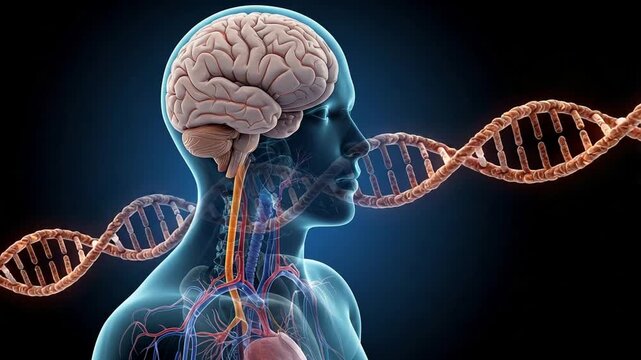
According to Ernest and Kathryn Rossi, pioneers of mind-body research at the Milton Erickson Institute of California, psychotherapy is a creative dialogue with our genes. Every moment of awareness, imagination, or emotional release activates genetic and neural mechanisms that literally reshape the brain.
From Milton Erickson to Molecular Biology
Milton Erickson — often ranked among the top ten psychotherapists of all time — worked without rigid methods or theories.
He trusted intuition, language, and rapport. “Don’t use someone else’s techniques,” he told his students. “Discover your own.”
His approach was deeply individual. He didn’t treat “disorders”; he disrupted patterns. He believed that trance and altered states were natural parts of daily life — ways for the mind to reorganize itself.
Ernest Rossi, one of Erickson’s closest students, took this intuition further. He built a bridge between Erickson’s art of hypnosis and the emerging science of gene expression and brain plasticity. In Rossi’s hands, Erickson’s conversational magic became a neurobiological process.
The Four-Phase Creative Cycle
Rossi discovered that both creativity and therapy unfold through a universal four-phase process:
- Preparation – The mind engages with a problem or inner conflict.
- Struggle – Tension, uncertainty, and frustration rise.
- Illumination – The moment of insight or “aha.”
- Integration – The new pattern stabilizes in thought, behavior, and biology.
This process mirrors a natural ultradian rhythm — a 90- to 120-minute biological cycle that governs rest, activity, and recovery.
Every effective therapy session, he found, unconsciously follows this rhythm. During it, the body synchronizes hormonal, neural, and genetic activity to support renewal.
Mind–Brain–Gene Communication
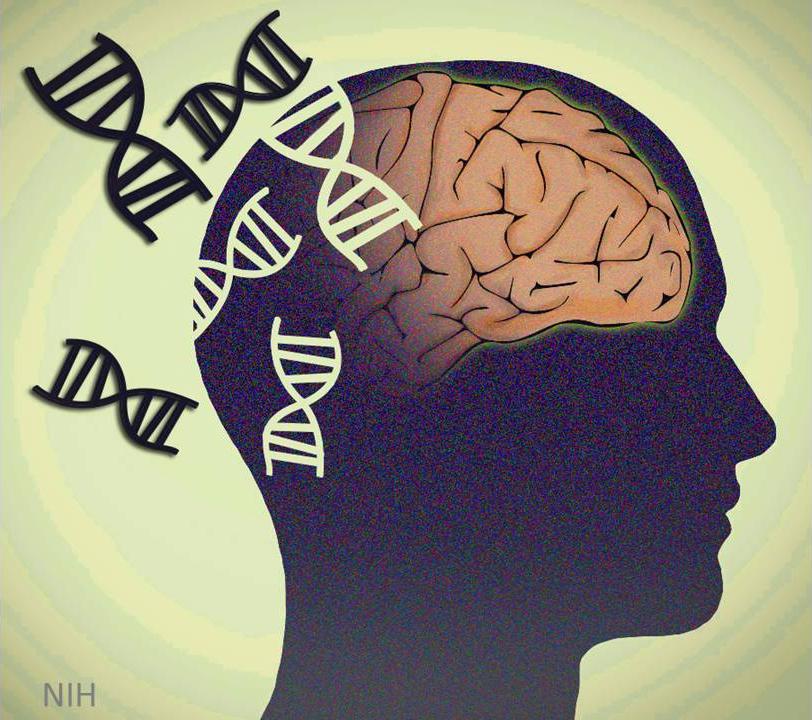
Rossi proposed a simple but radical mechanism: the brain and the genes talk to each other.
When new experiences, emotions, or ideas arise, the hippocampus records them as temporary “working memory.” Later — during rest, daydreaming, or REM sleep — it replays these memories back to the cortex, consolidating learning and creating new neural connections.
This dialogue triggers “activity-dependent genes,” leading to the synthesis of new proteins and the physical remodeling of synapses.
What we call insight is not an abstract event — it’s the biological moment when the brain rewires itself.
The Role of Gene Expression and Plasticity
Nobel laureate Eric Kandel demonstrated that long-term behavioral change always involves gene expression. Rossi connected this directly to therapy:
If psychotherapy produces sustained change, it does so through genetic and cellular processes.
During a session, when a client experiences deep attention, emotional release, or creative re-framing, the brain activates the same molecular cascades responsible for learning and regeneration.
In essence, psychotherapy becomes epigenetic training — guiding which genes turn on or off in response to experience.
The Biology of Rest and Insight

Rossi emphasized the importance of honoring natural cycles of rest and recovery.
Ignoring the body’s need for ultradian pauses leads to stress and psychosomatic illness; honoring them promotes integration and healing.
In hypnotherapy, he described alternating “high” and “low” phases of trance — active engagement followed by deep physiological restoration.
Healing, he argued, occurs not during constant effort but in the quiet rhythm of inner stillness, when the body reorganizes itself at the genetic level.
Dreams as the Laboratory of the Self
Dreams, Rossi suggested, are not random. They are biological workshops of adaptation.
During REM sleep, genes like zif-268 and Arc — known for driving neuroplasticity — activate to encode new experiences.
When life presents novelty or crisis, these genes help the brain rewrite memory networks, transforming stress into adaptation.
That’s why people often wake with clarity or new ideas after dreaming. The mind rehearses possible futures; the brain tests them; the genes record them.
Rossi called this process “creative replay.” It is the foundation of both learning and psychotherapy.
Mirror Neurons and Empathic Resonance
Modern neuroscience has confirmed that empathy is not only emotional but neural.
Mirror neurons fire when we observe another’s movement or emotion, creating shared brain states between therapist and client.
This resonance extends beyond psychology: hormonal and even genomic responses can synchronize between two people in deep rapport.
In this sense, healing is not something we “do” to another — it’s something that happens between nervous systems, through communication and attunement.
Implications for Psychotherapy
Rossi’s theory reframes the therapist’s role.
A session is not a conversation about change — it is change, happening in real time at the cellular level.
Every 90–120 minutes, the body completes a full cycle of creative renewal.
Therapeutic suggestion and insight align with these biological rhythms.
Healing occurs when the mind and body enter coherence — when awareness, emotion, and biology work together.
Each session, therefore, is a unique creative act — a moment when consciousness shapes biology.
Toward a New Science of Self-Creation

The Rossis’ work invites us to see the human organism as a living creative system.
Our thoughts, emotions, and relationships continuously sculpt the architecture of the brain and the expression of our genes.
Healing, in this view, is not the correction of pathology but the evolution of consciousness.
It is the art of using awareness to trigger the body’s innate capacity for renewal — the same way nature itself adapts and grows.
Key Takeaways
- Psychotherapy influences biology. Lasting change involves gene expression and neural plasticity.
- Insight has a rhythm. The natural 90-120-minute ultradian cycle governs creative and therapeutic processes.
- Rest is medicine. Recovery phases activate genetic and cellular repair.
- Dreams integrate experience. REM sleep replays and stabilizes new learning.
- Empathy is embodied. Mirror neurons create real physiological resonance between therapist and client.
- Healing is creation. Each session is a biological act of self-organization and growth.
Conclusion
Ernest and Kathryn Rossi’s “The New Neuroscience of Psychotherapy” transforms therapy from a purely psychological dialogue into a biological art form.
It shows that insight, imagination, and empathy are not abstract ideals — they are molecular events.
When the mind learns, the brain responds, and the genes listen.
That is the creative dialogue at the heart of healing.
[Book Your Professional Breakthrough Session →]
Esther Katz, RTT™ Practitioner
Certified Hypnotherapist & Rapid Transformational Therapist
Helping professionals worldwide transform their relationship with career change